

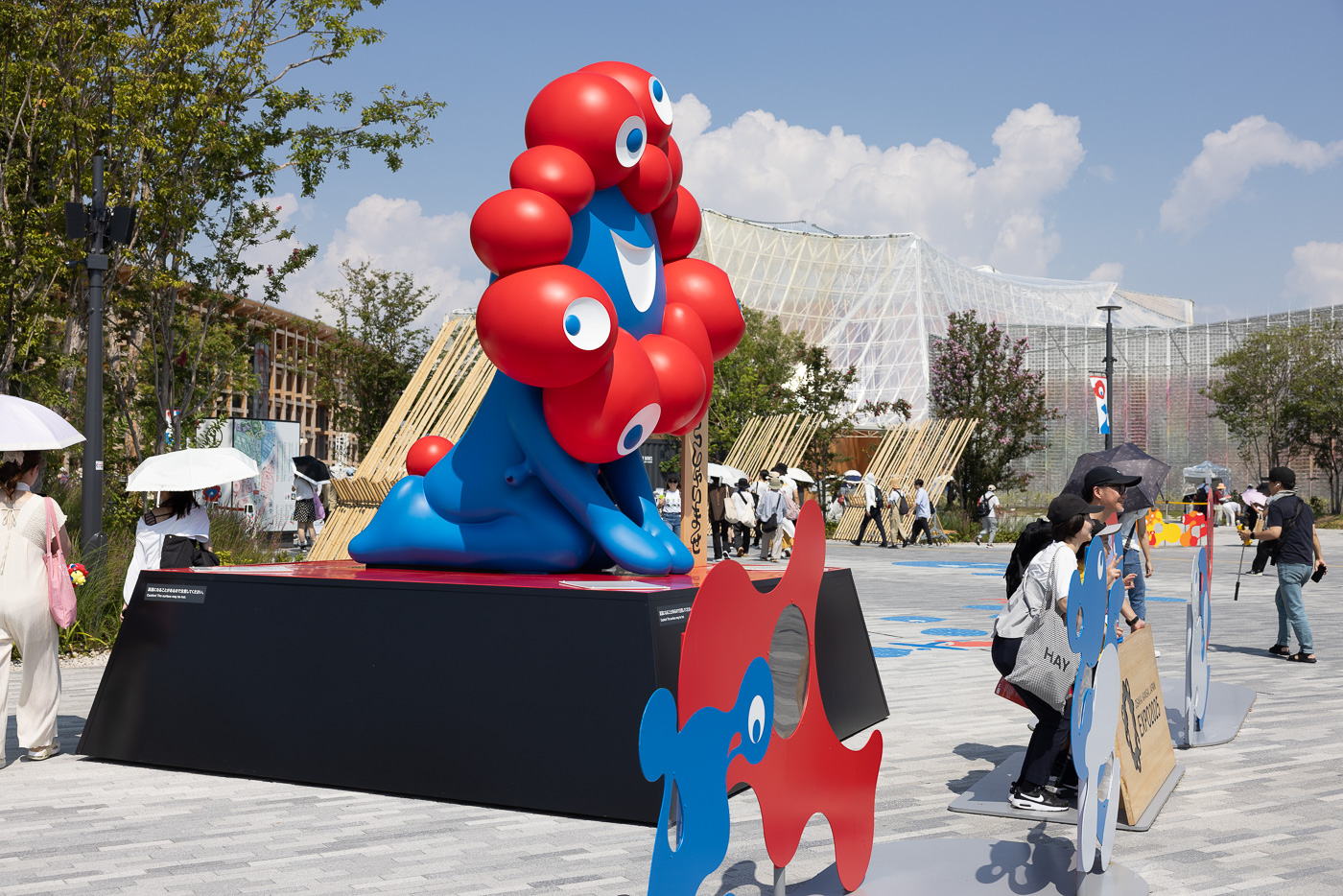
EXPO 2025 Osaka – Future, Cycle, and a Rainbow in the Night
A personal report following my 3-day visit to EXPO in Osaka, mid-August.
EXPO 2025 in Osaka carries its ambition in its name: Designing Future Society for Our Lives. Divided into the themes of Saving Lives, Empowering Lives, and Connecting Lives, it demonstrates how technology, design, and responsibility can find a common language. The venue is the artificial island Yumeshima – a former reclaimed island, now a symbol of change and new beginnings. Amidst sun, steel, wood, and water, a place was created here that not only showcases the future but makes it tangible.
The site is monumentally designed: pavilions, country zones, and thematic areas are grouped around the so-called Grand Ring, designed by architect Sou Fujimoto. A twenty-meter-high wooden ring structure with a diameter of over 670 meters encloses the heart of the exhibition. From above, via the green skywalk, the entire area can be circumnavigated – a symbol of “Diversity in Unity.” Those who walk the path feel how architecture and nature connect: shadows, wind, the scent of wood, and the view of Osaka Bay.
Temperatures in August were challenging. Despite the oppressive heat, the atmosphere remained focused and friendly. Everywhere, visitors fanned themselves, children ran through the pavilions with colorful stamp cards – part of the popular stamp rally that motivated young and old alike. Gastronomically, the EXPO was also a discovery: Japanese classics alongside international specialties, small oases with shade and cold tea as welcome resting places.
Among the most impressive buildings was the Japan Pavilion with the theme “Between Lives”. The circular building, constructed from hundreds of CLT wooden planks, symbolizes the cycle of all life. Light penetrates through gaps, as if the structure breathes. Inside, visitors move through a circular path powered by a biogas system – an installation where microorganisms convert the site’s waste into energy. This creates a “living pavilion” that immerses visitors in an endless cycle of emergence, decay, and return. Even the staff uniforms reflect this idea: recycled fabrics, inspired by the kimono, simple and elegant. Here, sustainability is not a topic, but an attitude.
Another highlight was the nighttime Water Show on the Water Plaza. Covering an area of almost 9,000 square meters, a stage of fountains, light, and sound was created. Approximately 300 water jets, lasers, fog, and projections told the story of a child named Ao, who discovers a rainbow on a mythical night and encounters an island full of celebrating creatures. This poetic narrative combined nature and fantasy with a spectacle of movement and color. Music and water merged into a choreographed flow – silent and monumental at the same time. It was less a show than a moment where technology, narrative, and emotion intertwined.
Despite all the splendor, there was also criticism: the booking and allocation system for the pavilions made spontaneous visits difficult, especially for the Signature Pavilions. Many waited patiently in the sun, others sought shade under the wooden structures. But perhaps that is also part of it – part of a world that must learn to reconnect patience and planning.
EXPO 2025 on Yumeshima is a place where grand ideas become visible without being loud. Wood, water, light, and sound here tell of cycles, connection, and change. Between architectural precision and fleeting moments, a lasting feeling emerges: that the future is not an abstract concept, but an attitude – shaped in the space between lives.
Related Posts:
Uffrur – 500 Years of the Peasants’ War
PROTEST! Stuttgart Exhibition
The Impact of Professional Trade Fair Photography
Contact us